
Amenemhat I
First pharaoh of Egypt's Twelfth Dynasty, moved capital to Itjtawy.

via Wikipedia: Amenemhat I · see source
Amenemhat I (Ancient Egyptian: Ỉmn-m-ḥꜣt meaning 'Amun is at the forefront'), also known as Amenemhet I, was a pharaoh of ancient Egypt and the first king of the Twelfth Dynasty of the Middle Kingdom. He was probably the same as the vizier named Amenemhat who led an expedition to Wadi Hammamat under his predecessor Mentuhotep IV, and possibly overthrew him from power. Scholars differ as to whether Mentuhotep IV was killed by Amenemhat I, but there is no independent evidence to suggest this and there may even have been a period of co-regency between their reigns. Amenemhat I was not of royal lineage, born to Senusret and Nefert who were possibly related to the nomarchial family of Elephantine. Many scholars in recent years have argued that Amenemhat I's mother was of Nubian origin. He moved the capital from Thebes to Itjtawy and was buried in Lisht.
- died
- Assassinated before his first Sed festival
- field
- Pharaoh of ancient Egypt
- known_for
- First king of the Twelfth Dynasty; moved capital to Itjtawy; associated with the
Lore & Background
Amenemhat I was probably the same as the vizier named Amenemhat who led an expedition to Wadi Hammamat under his predecessor Mentuhotep IV, and possibly overthrew him from power. Scholars differ as to whether Mentuhotep IV was killed by Amenemhat I, but there is no independent evidence to suggest this and there may even have been a period of co-regency between their reigns. Amenemhat I was not of royal lineage, born to Senusret and Nefert who were possibly related to the nomarchial family of Elephantine. The composition of some literary works (the Prophecy of Neferti, the Instructions of Amenemhat) and, in architecture, the reversion to the pyramid-style complexes of the 6th dynasty rulers are often considered to have been attempts at legitimizing his rule. Texts from the period mention his mother being from the Upper Egyptian nome Ta-Seti. Many scholars in recent years have argued that Amenemhat I's mother was of Nubian origin. Amenemhat I moved the capital from Thebes to Itjtawy and was buried in Lisht. Both the Instructions of Amenemhat and the Story of Sinuhe suggest he was assassinated before he could celebrate his first Sed festival.
Reader's Guide
Amenemhat I's significance lies in founding the Twelfth Dynasty and consolidating the Middle Kingdom after the First Intermediate Period. His Horus name, Wehemmesu, meaning 'renaissance' or 'rebirth', alludes to the Old Kingdom period, whose cultural icons and models were emulated by the Twelfth Dynasty kings. He moved the capital to Itjtawy, promoting a more centralized government. His pyramid at Lisht, built with inferior materials and incorporating blocks from Old Kingdom monuments, reflects both economic constraints and a deliberate archaizing style. The literary works attributed to his reign, such as the Instructions of Amenemhat, served to legitimize his rule. His reign is recorded in multiple king lists and by Manetho, though the lengths of his reign vary among sources. The uncertainty surrounding his accession and his assassination highlight the political challenges of his era.
Did You Know?
- Amenemhat I's Horus name, Wehemmesu, means 'renaissance' or 'rebirth', alluding to the Old Kingdom period.
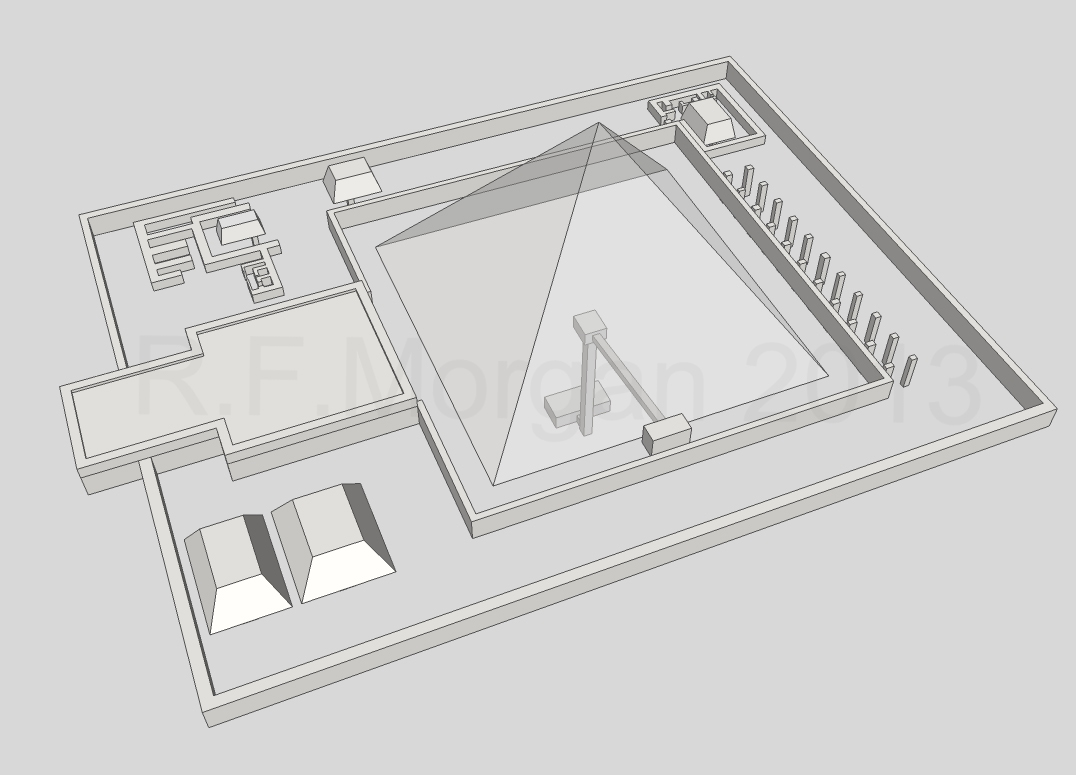
- His pyramid at Lisht had a core constructed from roughly hewn limestone blocks with gaps plugged with sand, debris, and mudbrick, and also contained relief-decorated blocks pilfered from Old Kingdom monuments.
- The Turin Canon accords him a reign of 29 years, while Manetho's Aegyptiaca gives 16 years (as Άμμενέμης) or 26 years (as Σταμμενέμης ά).
- Both the Instructions of Amenemhat and the Story of Sinuhe suggest he was assassinated before he could celebrate his first Sed festival.
- Amenemhat I's mother is identified in the 'Prophecy of Neferty' as a woman from the Upper Egyptian nome of Ta-Seti, and many scholars argue she was of Nubian origin.
Origins and the Quest for Legitimacy
Amenemhat I entered the world far from the throne. His father, a man named Senusret who held the title "god's father" (attested on a block from Karnak), and his mother, Nefret, were not members of the royal family. Nefret's name appears on an offering table discovered within Amenemhat's pyramid at Lisht, where she carries the title "king's mother." She is also likely the woman from the Upper Egyptian nome of Ta-Seti referenced in the Prophecy of Neferti. In recent decades, many scholars have argued that her background points to Nubian origins, a view echoed in the strong Nubian features visible in Twelfth Dynasty sculpture and relief work. Because he lacked dynastic blood, Amenemhat invested heavily in legitimizing his rule.
A Contested Accession
The path from vizier to pharaoh was anything but smooth. Amenemhat I is probably identical to the official of that name who led an expedition to Wadi Hammamat under Mentuhotep IV, and some scholars believe he overthrew his predecessor. Yet no independent evidence confirms a killing, and the possibility of a co-regency period has been raised. A bowl recovered from Lisht bears the names of both kings, which William Murnane interpreted as proof of a shared reign designed to validate the transfer of power. Nicolas Grimal disputes this, calling the co-regency fictitious, while Wolfram Grajetzki sees it as a simple mark of respect toward the late king. The Wadi Hammamat inscriptions record two miraculous events—a gazelle calf born on the stone that would become Mentuhotep IV's sarcophagus lid, and a sudden rainstorm revealing a brimming well—which Gae Callender reads as divine endorsement of the vizier's rise. The transition was further complicated by rival claimants, an Inyotef and a Segerseni, and by signs of unrest preserved in texts from Deir el-Bersha.
Consolidating a New Capital and a New Order
Once securely on the throne, Amenemhat I undertook a bold geographic and political reorientation: he relocated the capital away from Thebes to the newly established city of Itjtawy, a move that would define the administrative center of the Middle Kingdom for generations. His reign, which the Turin Canon records as lasting twenty-nine years, was not without its early turbulence. Inscriptions by a local governor named Nehri hint at political instability in the opening years, and naval engagements required the intervention of an associate, Khnumhotep I, who helped secure victory. Khnumhotep later became a prominent governor at Beni Hasan and founded a lasting line of local rulers there. Beyond the Nile, Amenemhat's forces conducted military campaigns against both Asiatic and Nubian groups, as recorded in Khnumhotep's own inscriptions. Despite these challenges, the pharaoh's legacy as the architect of a new dynasty was cemented by his burial at Lisht and by the literary and architectural programs that echoed the grandeur of the Old Kingdom.
Family, Tragedy, and the Echo of His Name
Amenemhat I's domestic circle is known only in fragments. His presumed wife, Neferitatjenen, is attested through a small statuette of their son Senusret I, which bore the inscription identifying the boy as "born to King Amenemhat and born of the king's mother Neferitatjenen." Tragically, that statuette was stolen from the Louvre in 1830 and is now lost. Three daughters are also named: Neferu III, who appears in the Story of Sinuhe and married her brother Senusret I, and Neferusherit and Kayet, both identified on artifacts from the pyramid complex at Lisht. The pharaoh's own end was violent; both the Instructions of Amenemhat and the Story of Sinuhe indicate he was assassinated before he could celebrate his first Sed festival. Yet his name endured across millennia, appearing in the Karnak King List, the Abydos king list, the Saqqara Tablet, the Turin Canon, and in Manetho's Aegyptiaca as preserved by Josephus, Africanus, Eusebius, and George Syncellus.
Gallery
Frequently Asked Questions
Who is Amenemhat I?
Amenemhat I (also spelled Amenemhet I) was a pharaoh of ancient Egypt whose name translates to 'Amun is at the forefront.' He is recognized as the founding ruler of the Twelfth Dynasty during the Middle Kingdom period.
How did Amenemhat I come to power?
He is believed to have been a vizier named Amenemhat who led a mining expedition to Wadi Hammamat under the previous ruler, Mentuhotep IV. Scholars debate whether he overthrew or even killed Mentuhotep IV, though some suggest a brief co-regency may have preceded his sole rule.
What is Amenemhat I most known for?
He is best known for establishing the Twelfth Dynasty and relocating the royal capital to the new city of Itjtawy. This move effectively set the administrative and political stage for the entire Middle Kingdom era.
How did Amenemhat I's reign end?
Amenemhat I was assassinated before he could celebrate his first Sed festival, a major jubilee rite marking a pharaoh's long and successful rule. His violent death left a significant political gap that his successors had to navigate.
Why is Amenemhat I important in Egyptian history?
As the first king of the Twelfth Dynasty, he launched the most prosperous and culturally rich period of the Middle Kingdom. His establishment of Itjtawy as the capital and his consolidation of power after a contested succession made him a pivotal figure in Egypt's long dynastic narrative.
More in Ancient Rulers Of Africa And The Near East 1-24
Elsewhere in the Ancient Rulers Of Africa And The Near East universe
Spotted an error? Know more?
This is a living reference — every entry is fact-audited, and reader corrections feed straight into our audit queue. Suggest an edit · See this site's audit record