
Alara of Kush
First recorded prince of Kush and founder of the Napatan dynasty.

Alara was a King of Kush, generally regarded as the founder of the Napatan royal dynasty by his 25th Dynasty Kushite successors and the first recorded prince of Kush. He unified all of Upper Nubia from Meroë to the Third Cataract and established Napata as the religious capital of Kush. Alara himself never controlled any region of Egypt, unlike his immediate successors Kashta and Piye.
- title
- King of Kush
- known_for
- Founder of the Napatan royal dynasty; first recorded prince of Kush; unified Upper Nubia from Meroë to the Third Cataract; established Napata as religious capital
- predecessor
- None recorded (first recorded prince of Kush)
- successor
- Kashta
- burial
- Royal cemetery of El-Kurru, tomb Ku.9 (presumed)
- spouse
- Queen Kasaqa
- daughter
- Queen Tabiry
Lore & Background
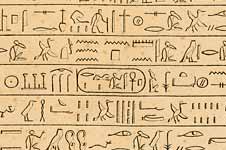
Alara's existence is first documented on the Egyptian hieroglyphic stele of Queen Tabiry, his daughter by Queen Kasaqa. Although Tabiry's stele does not assign Alara a royal title, his name appears in a cartouche, confirming he was a Kushite king. He is also mentioned as the brother of Taharqa's grandmother in inscriptions at Kawa (ca. Nubiologist Timothy Kendall has claimed that Alara is the king 'Ary' Meryamun, whose Year 23 is inscribed on a fragmented stele from the Temple of Amun at Kawa, but Hungarian Egyptologist László Török rejects this view, believing 'Ary' to be a later post-25th Dynasty king named Aryamani. Kendall's epigraphic arguments are not accepted by other scholars. Alara was buried at the royal cemetery of El-Kurru downstream from Napata. His wife Queen Kasaqa was buried in tomb Ku.23, located next to tomb Ku.9, which is presumed to belong to Alara. Kendall notes that the occupant of Ku.9 was interred in the traditional Nubian manner—lying on a bed in a small side-chamber at the bottom of a vertical shaft—while the visible tomb superstructure incorporated many Egyptian features, including a crude low-relief chapel and a plain stone offering table. One block preserved the upper part of a male head wearing a crown with streamers and a loop-like ornament over the brow imitative of a uraeus, suggesting either that the tomb owner by the end of his reign had come close to identifying himself as a true pharaoh, or that his successor provided such sentiments in the posthumous depiction. Török concurs that the mortuary cult chapel of Ku.9 seems to have been the first at el-Kurru to be provided with a tomb stele and a funerary offering table.
Reader's Guide
Alara holds a foundational place in Kushite history as the first recorded prince of Kush and the king whom later 25th Dynasty rulers regarded as the founder of their Napatan royal dynasty. His unification of Upper Nubia from Meroë to the Third Cataract and his establishment of Napata as the religious capital set the stage for the expansion of Kushite power under his successors Kashta and Piye. Although Alara never controlled any part of Egypt, his memory was central to the origin myth of the Kushite kingdom, embellished with new elements over time. Nubian literature credits him with a substantial reign, as future Nubian kings requested to enjoy a reign as long as his. His deep reverence in Nubian culture is reflected in the fact that he is the first Kushite king whose name has come down to scholars. The archaeological evidence from his presumed tomb at El-Kurru shows a blend of traditional Nubian burial practices with Egyptian architectural and artistic features, indicating a transitional period in Kushite royal ideology. Scholarly debate continues over whether Alara is identical to the king 'Ary' Meryamun mentioned on a stele from Kawa, but this remains unresolved.
Did You Know?
- Alara is the first Kushite king whose name has come down to scholars.
- His existence is first documented on the Egyptian hieroglyphic stele of his daughter Queen Tabiry.
- Alara was buried in the traditional Nubian manner, lying on a bed in a small side-chamber at the bottom of a vertical shaft.
- His presumed tomb at El-Kurru (Ku.9) was the first in that cemetery to include a tomb stele and a funerary offering table.
Ancient Roots Along the Nile
The Nile corridor spanning what is now northern Sudan and southern Egypt served as one of the earliest incubators of complex human society. Around 7500 BC, the Nabta Playa civilization arose in Nubia, producing megalithic structures that appear to be among the world's first astronomical instruments—predating Stonehenge by nearly two millennia. These New Stone Age communities maintained planned village layouts and deep wells providing year-round water. Centuries later, the A-Group culture flourished from roughly 4000 to 2900 BC, with key settlements at Kubaniyya, Buhen, Aswan, Sayala, Toshka, and Qustul. By 2500 BC, the Kerma culture had taken root in Upper Nubia, eventually absorbing the Sudanese kingdom of Saï and growing into a populous empire that rivaled Egypt itself. The city-state of Kerma dominated the stretch of river between the first and fourth cataracts from approximately 2450 to 1450 BC, controlling a territory comparable in size to Egypt proper.
Kush and the Egyptian Crossroads
For centuries, Kush and Egypt existed in a complex relationship of intermittent warfare, trade, and cultural exchange. The Egyptians were the first to record the name, likely derived from the indigenous ethnonym 'Kasu.' During the New Kingdom period (1550–1070 BC), much of Nubia fell under Egyptian control. Yet even under that rule, Kushite identity remained distinct—Egyptian art specifically differentiated Kushite people by their dress, appearance, and methods of transportation. After Egypt's disintegration during the Late Bronze Age collapse, the Kushites reestablished their kingdom at Napata, in modern-day Karima, Sudan. In the 8th century BC, King Kashta peacefully assumed the throne of Upper Egypt, while his daughter Amenirdis was named divine adoratrice of Amun in Thebes. His successor Piye then invaded Lower Egypt, founding the Twenty-fifth Dynasty, with his daughter Shepenupet II also receiving that same priestly title. Kushite monarchs governed Egypt for over a century until the Assyrian kings Esarhaddon and Ashurbanipal dethroned them in the mid-7th century BC.
From Meroë to Dissolution
After the severing of ties with Egypt, the Kushite imperial capital shifted to Meroë, a period during which the Greeks referred to the region as Aethiopia. The northernmost stretch of Nubia was occupied from the 3rd century BC through the 3rd century AD, first by the Ptolemaic Kingdom and later by Rome. At the close of this six-century span, the territory known as Dodekaschoinos was reclaimed by the Kushite king Yesebokheamani. The kingdom endured as a major regional power until the 4th century AD, when worsening climate, internal rebellions, and foreign invasions—particularly by the Noba people—began to erode its foundations. While Kush was preoccupied with conflicts against the Noba and the Blemmyes, the Aksumites seized the opportunity to capture Meroë and plunder its gold. Negus Ezana subsequently adopted the title 'King of Ethiopia,' a practice that persisted into the modern era and was documented in inscriptions at both Axum and Meroë. The Aksumite presence, though likely brief, triggered the kingdom's fragmentation into three successor polities: Nobatia, Makuria, and Alodia, with the latter absorbing the southern territories of the former Meroitic empire, including parts of Eritrea.
A Civilization Long Overlooked
For centuries, the achievements of Kush were overshadowed by the more widely studied civilization of Egypt. Yet archaeological discoveries beginning in the late 20th century have fundamentally reshaped understanding of this Nubian civilization. The Kushites possessed their own unique language and writing system, maintained a sophisticated economy rooted in trade and industry, and mastered the art of archery. Perhaps most remarkably, they developed a complex urban society characterized by uniquely high levels of female political and social participation—a fact underscored by the appointment of royal daughters such as Amenirdis and Shepenupet II to the prestigious role of divine adoratrice of Amun. The native name of the kingdom, recorded in Egyptian as kꜣš, was also an ethnic designation for the people who founded it, appearing in personal names like Kashta, meaning 'one from the land of Kush.' In Greek sources, the region was known as Kous or Aethiopia, and since at least the era of Josephus, the name has been linked to the biblical figure Cush, son of Ham. These threads collectively paint a picture of a civilization with deep roots, distinct identity, and enduring influence across the ancient world.
Gallery
Frequently Asked Questions
Who is Alara of Kush?
Alara is the earliest recorded ruler of Kush and is traditionally credited by his 25th Dynasty Kushite successors with founding the Napatan royal line. He holds the distinction of being the first prince of Kush whose name appears in the historical record.
What did Alara of Kush accomplish as king?
He consolidated Kushite control over the entirety of Upper Nubia, spanning from Meroë to the Third Cataract, and designated Napata as the religious capital of the kingdom. These moves laid the institutional groundwork for the later Kushite incursions into Egypt.
Who succeeded Alara of Kush?
Kashta followed Alara on the Kushite throne and continued the dynasty's expansionist trajectory, eventually pushing forces into Egypt. Alara himself never held any Egyptian territory, so Kashta's campaigns marked a new phase in Kushite ambition.
Where is Alara of Kush buried?
He is presumed to rest in tomb Ku.9 at the royal cemetery of El-Kurru, though this identification has not been definitively confirmed by excavation. No other burial site has been securely linked to him.
Did Alara of Kush ever rule over Egypt?
No. His domain was confined to Kush proper, stretching between Meroë and the Third Cataract. It was his successors Kashta and Piye who first brought Egyptian regions under Kushite authority.
More in Ancient Rulers Of Africa And The Near East 1-24
Elsewhere in the Ancient Rulers Of Africa And The Near East universe
Spotted an error? Know more?
This is a living reference — every entry is fact-audited, and reader corrections feed straight into our audit queue. Suggest an edit · See this site's audit record